This is a quick review of the newly released film The Odyssey. Please note that this is just one of the many movies I will have watched each year, and my initial grade for this film may change over time, for better or worse. To stay up to date on my thoughts about other movies and any potential changes in my opinion on this one, follow me on Letterboxd.
Plot
Via Letterboxd: Odysseus, the legendary King of Ithaca, embarks on a long and perilous journey home following the Trojan War. Throughout his voyage, he is forced to confront the whims of gods, mythological monsters, and trials that stretch both his cunning and his humanity to the breaking point.
Review
I don’t think it’s too controversial a take to assert that The Odyssey, the great poem by the ancient Greek poet Homer, chronicling the epic tale of the victorious Odysseus and his years-long journey home after the events of The Iliad, is arguably the greatest story ever told, save perhaps for certain religious texts and the decades-spanning manga masterpiece that is One Piece.
It’s easy to find yourself rooting for one man as he traverses treacherous seas, dodges sea monsters, outwits cyclopes, survives encounters with witches and gods, and endures every trial imaginable, all so he can return home to the wife he so dearly loves. It’s a classic adventure story that contains a little bit of everything that we crave in our stories with action, romance, mythology, suspense, larger-than-life characters, terrifying monsters, and timeless themes. It is a tale that has survived centuries, weathered the rise and fall of empires, and remained relevant because it truly is just that damn good. Sometimes I wonder if any original film from the last 150 years of cinema’s history will endure as long as Homer’s poem has.
And yet, bringing this story to the silver screen has always been a daunting task, one that many great directors have avoided altogether. There have certainly been attempts to create a definitive screen adaptation. 1911’s silent film L’Odissea remarkably still exists today for anyone to watch in the public domain. Kirk Douglas starred in 1954’s Ulysses, a film that made more than a few changes to the source material. The Coen Brothers delivered a loose, satirical reimagining of the story in Depression-era America with 2000’s O Brother, Where Art Thou?. I’ve seen them all, and while I enjoyed each to varying degrees, none came close to what I would call the definitive adaptation of the tale - if anything, two television miniseries are probably the best and most faithful adaptations.
Even as large-scale epics returned to prominence in the 21st century with films like The Lord Of The Rings trilogy and Gladiator, nobody seemed willing to summon the testicular-fortitude necessary to tackle The Odyssey. The closest we came was 2004’s Troy, an adaptation of The Iliad that received mixed reviews from critics and respectable, if hardly rave, reactions from audiences. Even with modern filmmaking technology, many insisted The Odyssey was simply unfilmable. The story was too vast in scale, covered too many years, contained too many side characters and subplots, and presented too many trials for Odysseus to overcome. It was, quite simply, too epic.
Enter Christopher Nolan. The man who directed a superhero trilogy that many consider among the greatest ever made, including one film, The Dark Knight, that is frequently mentioned in conversations about the greatest film of the 21st century. The man who delivered a space exploration epic with Interstellar that, for some viewers, stands alongside 2001: A Space Odyssey. The man who turned a three-hour drama about the inventor of the atomic bomb into a near-billion-dollar box office phenomenon with Oppenheimer, a film that ultimately went on to win Best Picture at that year’s Academy Awards.
Does Nolan have his skeptics? Absolutely. There are those who feel his films can sometimes lack thematic depth. Does he have recurring criticisms? Certainly. More than a few critics, particularly female critics, have argued that the women in his male-dominated filmography are underwritten. Has he stumbled? Of course. Even though I personally vouch for them, there are plenty of viewers who came away underwhelmed by ambitious swings like Tenet. Nolan is not without flaws, nor is he beyond debate when it comes to his storytelling choices.
But his body of work speaks loudly enough that he has amassed a legion of fans who believe he belongs in the conversation for the greatest director of his generation. As a matter of full disclosure, I count myself among them, as I truly do not believe Nolan has made any movie that is worse than something I’d grade with a B+ review. Personally, the only living filmmaker I would rank above him is Paul Thomas Anderson. Keep that in mind as you read my review of this film.
It’s fitting that after finally adding one of his films to the canon of Best Picture winning titles, that Nolan chose to take on the story of all stories, an epic that has outlived kingdoms, dynasties, and entire civilizations throughout time. This supposedly unfilmable tale was exactly the kind of challenge one would expect him to embrace. Nolan has never been a filmmaker afraid of taking risks or thinking on the largest scale imaginable. Even his harshest detractors would probably concede that point. His decision to adapt Homer’s masterpiece feels completely in character and on-brand for him.
And thus, Christopher Nolan gives us his latest film, The Odyssey.
This is a nearly three-hour film that attempts to condense a story that literally spans two decades. It has to communicate a juggling act of following Odysseus’ dangerous adventures, flashbacks to the great victory at Troy, and the ongoing drama back home where his family awaits him while ill-intentioned suitors desecrate the palace of Ithaca. And keep in mind, once again, that we’re talking about a story featuring giants, cyclopes, sea monsters, witches, and gods. It’s a lot to take in.
During the first act, I can absolutely see why some viewers may find the film a little clunky and uneven as it tries to take root, especially given Nolan’s signature non-linear storytelling. I do think this messy start will be much easier to forgive on rewatches because once the story takes root and the second act arrives, that’s when Nolan’s magic really starts to work wonders.
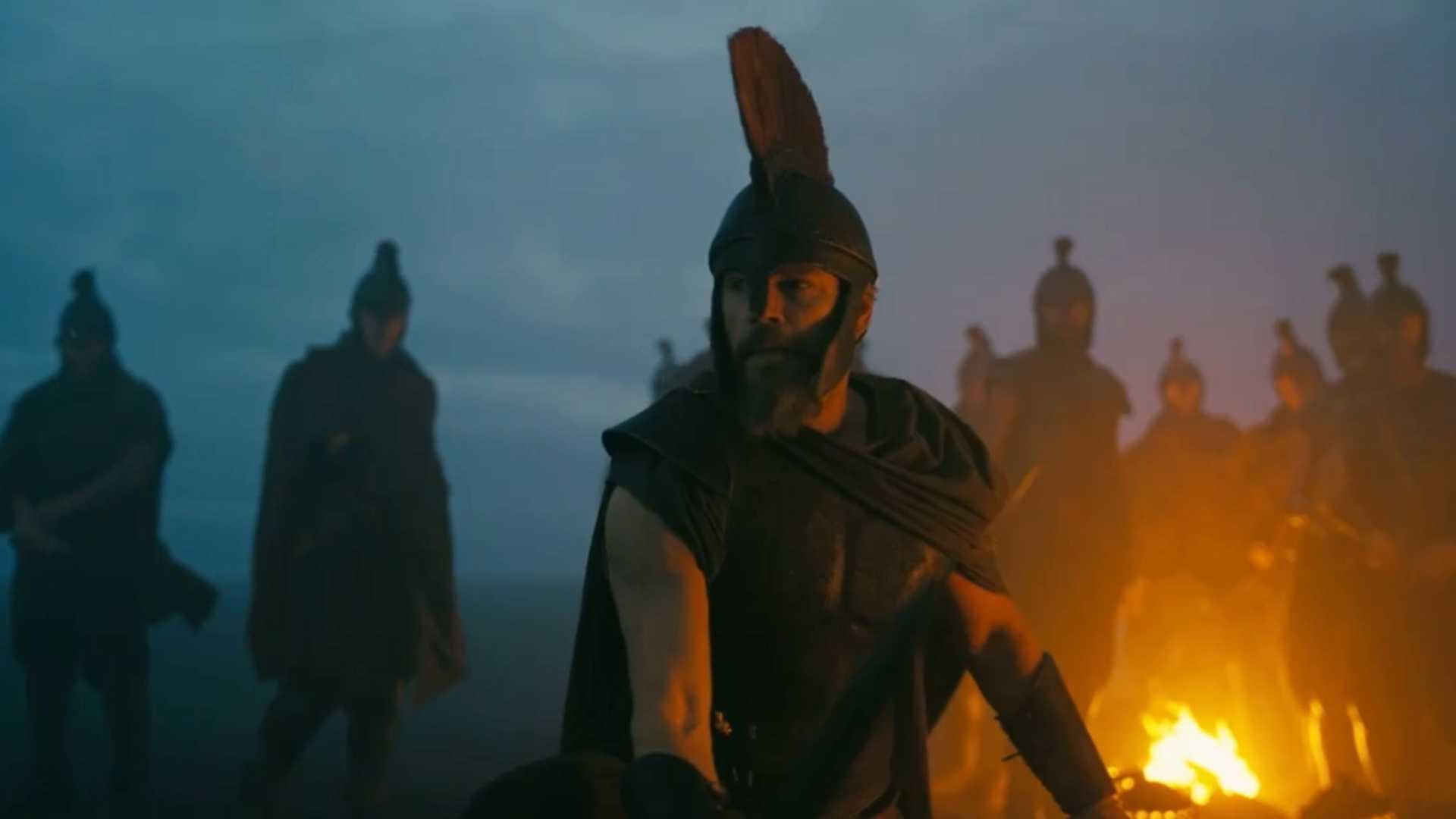
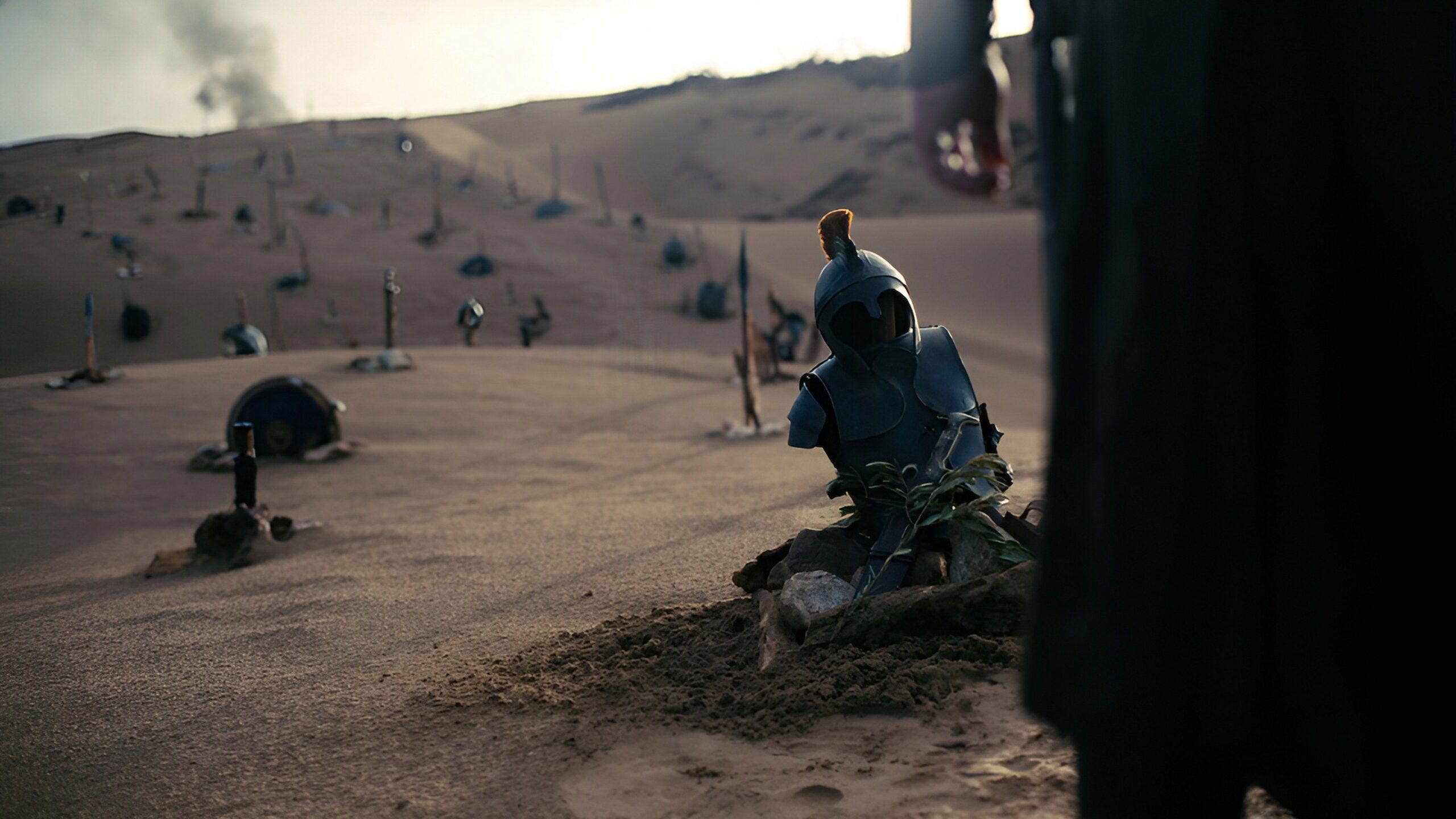
If you’re coming for the kind of grand spectacle found in the sword-and-sandal classics that I personally fell in love with growing up watching on TCM, this movie absolutely delivers. The world of Homer’s tale comes to life through impeccable filmmaking across so many disciplines. The direction is Nolan operating at his peak. The costumes and production design are lavish and completely immerse you in the film regardless of whether they’re historically accurate. Ludwig Goransson delivers yet another incredible score. The sound design and large-scale set pieces are phenomenal. Jennifer Lame’s editing is propulsive and masterful, much as it was in Oppenheimer. By the time the credits rolled, I genuinely felt like I had just experienced what it must have been like to watch The Ten Commandments or Ben-Hur on the big screen when they first premiered back in the 1950s. If nothing else, I hope we can all agree that this film’s craftsmanship is an extraordinary example of collaborative artistry.
The ensemble is outstanding. I truly found every single performer here, no matter how big or small the role, to have brought their A-game.
Matt Damon delivers such a compelling performance as the King of Ithaca, the genius whose cunning ended the Trojan War. He conveys such a wide range of emotions that I completely bought him as both a brilliant general and ruler who is ultimately humbled by the gods for his hubris and tragically loses a part of himself in the process. It’s hard for me to picture anyone else in the role now.
Anne Hathaway gives Penelope such admirable nuance that I completely believed her husband would go through hell and back to return to her. Tom Holland, as Odysseus’ son Telemachus, seems to be receiving mixed reactions, but for me this is the best performance of his career so far; I was genuinely impressed. Robert Pattinson is exceptional as the villainous Antinous, fully embracing the role in a way that is so effective my audience actually applauded when karma finally came for him. Himesh Patel also makes a strong impression as Eurylochus, commanding every moment he’s given.
But it doesn’t stop there. The supporting ensemble is filled with smaller performances that still leave a lasting impact. John Leguizamo gets an opportunity to show off his dramatic chops. Samantha Morton steals the show with a horrifying sequence that had me wincing in my seat. Charlize Theron completely sells the idea that a man would spend years stranded with her on a deserted shore. Mia Goth serves as a fascinating foil to Hathaway. Lupita Nyong’o pulls double duty and, in limited screen time, reminds everyone exactly why she has an Oscar on her resume. Jon Bernthal is excellent as a man haunted by his past and paranoid about the future. Corey Hawkins deserves praise for an effective villainous turn of his own. Benny Safdie manages to feel imposing without even showing his face. Elliot Page deserves none of the nonsense criticism that followed his casting, delivering a genuinely tragic and affecting performance. Zendaya makes every moment count, and a major turn involving her character elicited an audible gasp from me.
I could go on and on. This is one of the great ensemble achievements I’ve seen onscreen, much in the way Oppenheimer succeeded through the strength of its own massive cast.
The story itself, once again, takes time to settle during the first act as we come to understand the situation in Ithaca and exactly where Odysseus finds himself before the film shifts into high gear and the long journey home begins in earnest. Even knowing full well where these characters are destined to end up, I found myself fearing for Odysseus and his men. I was on the edge of my seat every time they encountered danger, and hoped they all would get home.
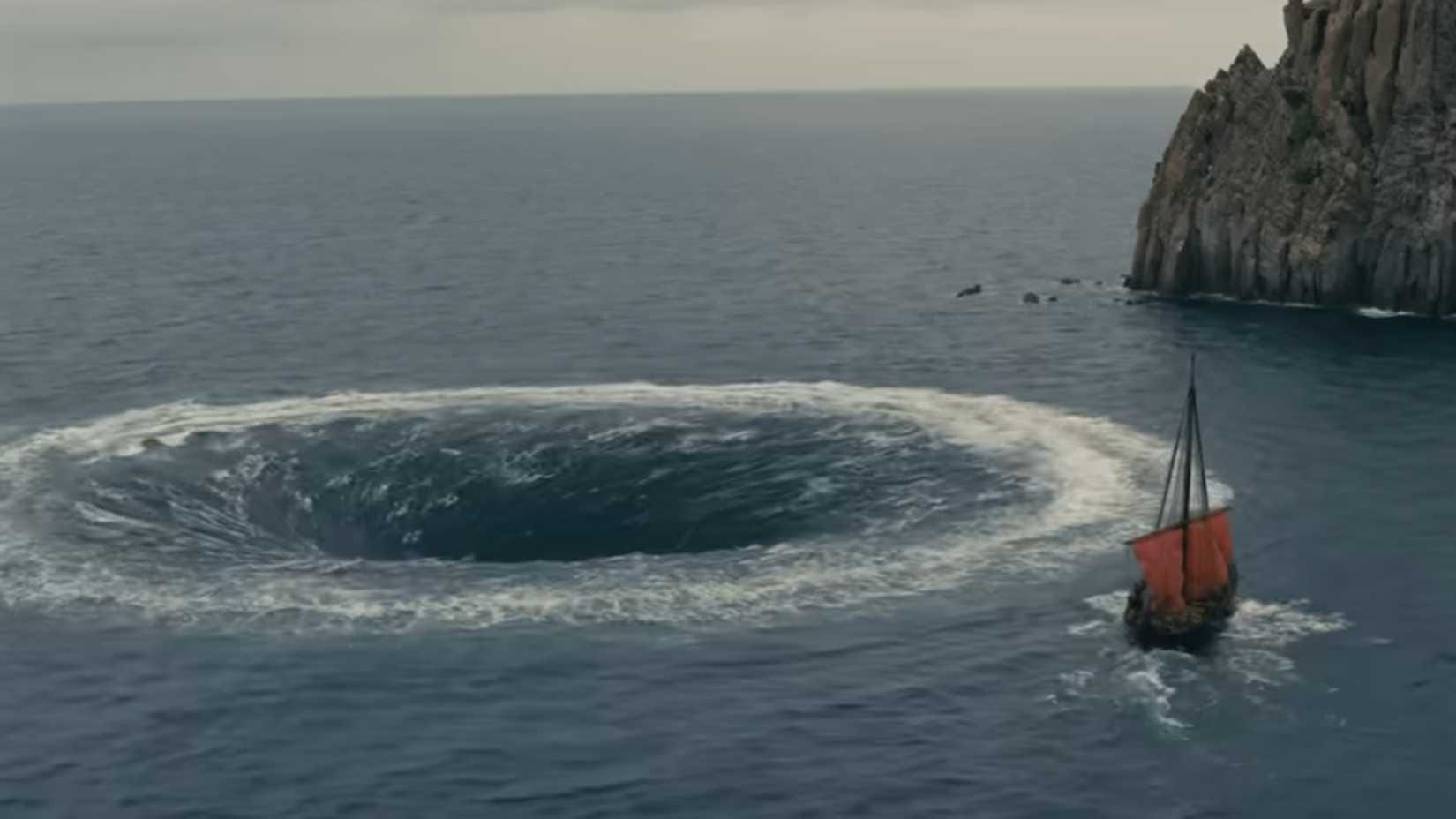
The journey home contains some incredible sequences that allow Nolan to flex muscles we don’t often get to see from him. Whether it’s a man-eating cyclops, a disturbing body-horror sequence, terrifying sea monsters, or an eerie conversation with the dead, there are moments here that feel closer to horror than traditional adventure filmmaking.
The third act is where everything finally comes together for me. It’s where the heart of the film truly reveals itself. It’s where the movie dares to go deeper, not only examining the epic adventure our protagonist has endured but also placing under a microscope how his own actions changed the world in ways that will haunt future generations.
War is not pretty. The means by which you achieve victory do not always earn you the rewards you think they will. Redemption for past sins does not come with putting Pandora back in the box. Sometimes fighting your fate causes more damage than accepting it. For those who argue that Nolan’s films lack thematic depth, I simply can’t agree after seeing where this story ultimately goes in its final act.
But the more important question you, the reader, probably wants answered is will you be entertained? Will you enjoy the experience you’re paying a hefty ticket price for while working your way through an extra-large bucket of popcorn your doctor would probably advise against and washing it down with a giant soda?
Yes.
If you simply want to go on a ride, be entertained, and share in a communal theatrical experience as you and the rest of the audience root for Odysseus to finally make it home, you will have a great time. At the end of the day, this is a crowd-pleasing summer blockbuster that succeeds at exactly what it sets out to do, and I suspect many of you will be revisiting it more than once - I certainly will.
So clearly, I adored The Odyssey. Yes, I am admittedly a Nolan stan. Yes, I am admittedly someone who loves epic films like this. But when it comes to evaluating a movie, I ultimately fall back on my own experience with it.
Can I nitpick some adaptation changes I wish Nolan hadn’t made? Absolutely. Can I point to aspects of the first act that are clunkier than the significantly stronger remainder of the film? Of course.
But at the end of the day, how did this movie make me feel? How did it age with me over the two days following my press screening as I continued thinking about it?
The answer is simple. This is now my personal favorite film of the year. This is one of my favorite films of the decade. I would place it alongside masterpieces like The Ten Commandments and Ben-Hur. I would even dare to say that this may be my personal favorite Christopher Nolan film, standing shoulder to shoulder with The Dark Knight.
Speaking only for myself, I believe Nolan has achieved something that audiences will continue watching long after both he and I are no longer on this planet. This is, for me, a masterpiece of epic storytelling. It is the kind of film that will define Nolan’s legacy just as his other great works have. And because of that, I have to give it the highest grade I can.
This is an odyssey worth taking again and again, and many audiences will be taking it through Nolan’s film for years to come, in the same way past audiences did for so long reading Homer’s masterpiece.
“TL;DR”
Pros: Impeccable filmmaking in so many facets of presenting a motion picture from the direction, the crafts, the score, the editing, and the practical visual effects; Entire ensemble brings its A game; An incredible third act that brings things together to a crowd pleasing climax; The definitive film adaptation we’ve gotten to what is arguably the story of all stories; Nolan’s Ben-Hur or The Ten Commandments
Cons: Nolan’s non-linear storytelling might make the first act a little clunky for some on first watch; Adaptation changes (in story, not in casting) that might be a nitpick for purist lovers of the source material