
Film Review: No Other Choice
The Latest Film From Park Chan-wook

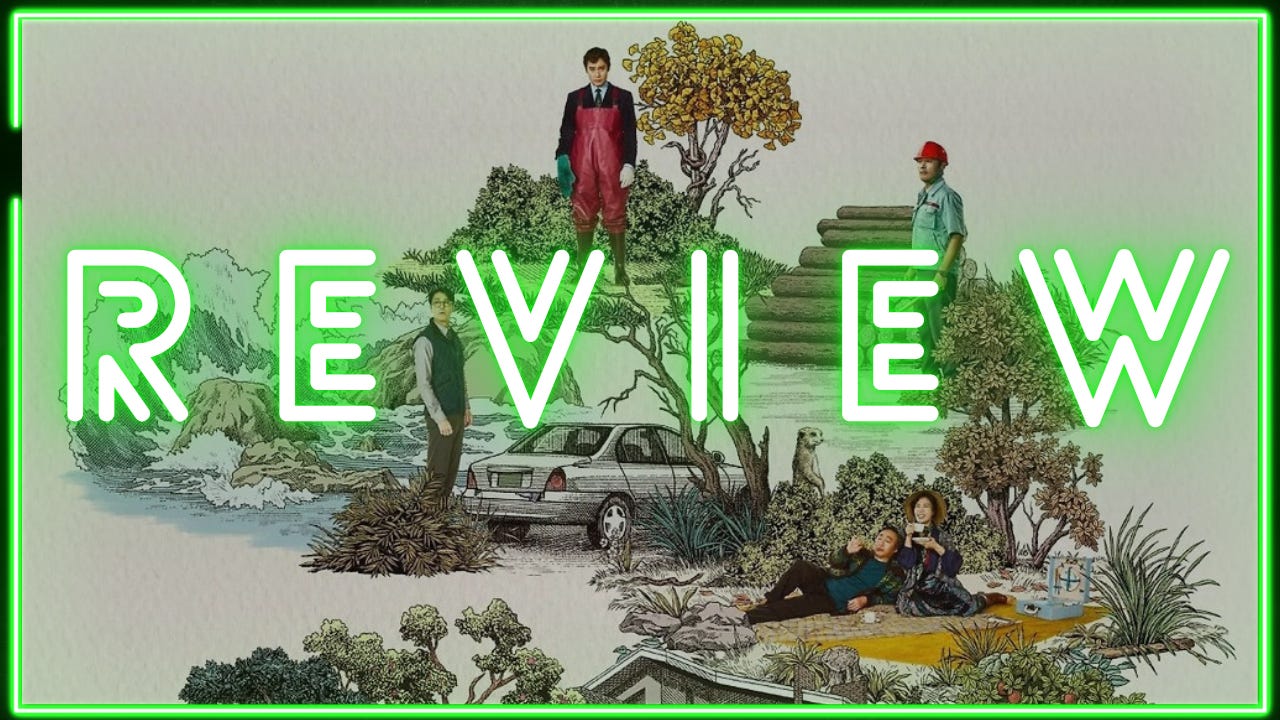
INTRODUCTION
This is a quick review of the newly released film No Other Choice. Please note that this is just one of the many movies I will have watched each year, and my initial grade for this film may change over time, for better or worse. To stay up to date on my thoughts about other movies and any potential changes in my opinion on this one, follow me on Letterboxd.
If you enjoy these reviews, I’d greatly appreciate it if you could share this newsletter with family and friends who might love receiving film reviews, classic movie lists, and Oscars projections straight to their inbox.
PLOT
Via Letterboxd: After being laid off and humiliated by a ruthless job market, a veteran paper mill manager descends into violence in a desperate bid to reclaim his dignity.
REVIEW
Fresh off his HBO TV miniseries, The Sympathizer, the iconic and legendary Korean director Park Chan-wook has dipped his toes back into film with his latest, No Other Choice. Which, incidentally, has him teaming up once again with Lee Byung-hun, fresh off starring in the Squid Game series and doing voice work for this year’s animation mega-hit, KPop Demon Hunters. Together, they’ve collaborated on one of the many international titles this season enjoying legit awards buzz, coming out of the Toronto Film Festival after picking up the audience award for the international prize.
Park Chan-wook’s films have always hit for me; though, admittedly, maybe not as hard as they have for others who rank him as one of their all-time favorites. Call me basic, but for me, Oldboy remains his greatest achievement, and his more recent films have left me frustrated in a very particular way. I’ve really liked them, but also felt like they stumbled a bit down the finish line. Movies that, on paper, had A-tier “favorites of the year” potential for me ended up landing as really strong B+ flicks, films that make my personal ballots in a few categories but ultimately don’t rank among the major highlights of my year. But nothing about that is meant to demean Park. Even his weaker work tends to clear the bar for what most directors crank out. Hell, even the “worst” Park Chan-wook movie is still better than the average film.
With No Other Choice, though? I came into this genuinely fascinated by the premise. I’m writing this in the middle of my own job search, with a pregnant wife who’s in school rather than working, and a house that has needed a serious re-organization for years; on top of me juggling the thick of awards season as a film critic while trying to stay sane in my daily life. So the idea of a man being so desperate to find work and provide for his family that he starts to literally eliminate the competition in a weird, twisted way? Yeah, that hits. Not that I’m quite ready to go to those extremes, but the film speaks to something very real at a time when the economic picture is going downhill and more people are watching job security evaporate as automated labor and remote work reshape the market.
Obviously, a premise like that is best left to dark comedy and satire; and the film handles that tone expertly enough that we never fully recoil from our protagonist’s behavior, even as his actions become increasingly heinous. The movie smartly mixes grim reality with punchlines that actually land, especially when we get to know the personal struggles of the job hunters who end up becoming his targets, people who are just as desperate and defeated by unemployment, some of them almost painfully relatable.
Our lead is Yoo Man-soo, played by the aforementioned Lee Byung-hun, and the film does solid work fleshing out him and his family dynamic. We see them at their peak “living the dream” at the start, which makes the steady erosion of their life as unemployment lingers even more effective. Man-soo’s relationship with his wife, Lee Mi-ri (played by Son Ye-jin), is easily the strongest bond in the film. They actually feel like a team in a way I love seeing onscreen couples portrayed; even as his descent pushes her to the brink of questioning whether she should stick by him.
And of course, this dark comedic slow-motion train wreck is only improved by some killer technical work across directing, cinematography, editing, and dialogue. Even the production design gets a few licks in. As should be expected from any Park Chan-wook flick, this thing is well-crafted.
If I had to mention my gripes after first viewing, it’s that I’m conflicted about just how much I actually like it. Don’t get me wrong, right this second?, I really enjoyed this. It was funny, it was resonant, it’s sharp, and it’s gorgeous to look at. But it also exhibits my biggest and most recurring issue with Park’s filmography - once again, it seems to peak in the middle and lose momentum in the homestretch. I didn’t feel that immediately walking out, but in the hours since, I can sense the pattern creeping back in. Still, even with that, I’d comfortably rank this above his last few films.
I’m going to wait and see how this one sits with me by year’s end. Maybe a re-watch bumps my grade up a bit. For now? I’m settling on a really strong B+, a movie that I suspect a lot of audiences are going to connect with, even under layers of pitch-black comedy that will make them squirm as much as laugh.
“TL;DR”
Pros: Very funny; The kind of dark comedy you can recommend to your friends and family; Hits hard at the harsh realities of the changing workplace market in a world where automated work and remote positions are becoming more of a norm; PCW’s signature stylings in its cinematography and editing
Cons: Like my issues with most of PCW’s works, the film seems to peak and then lose momentum as we get into the final act, though not as badly as I felt previous films of his have
GRADING