
Film Review: The Devil Wears Prada 2
Icons Reign Forever

Introduction
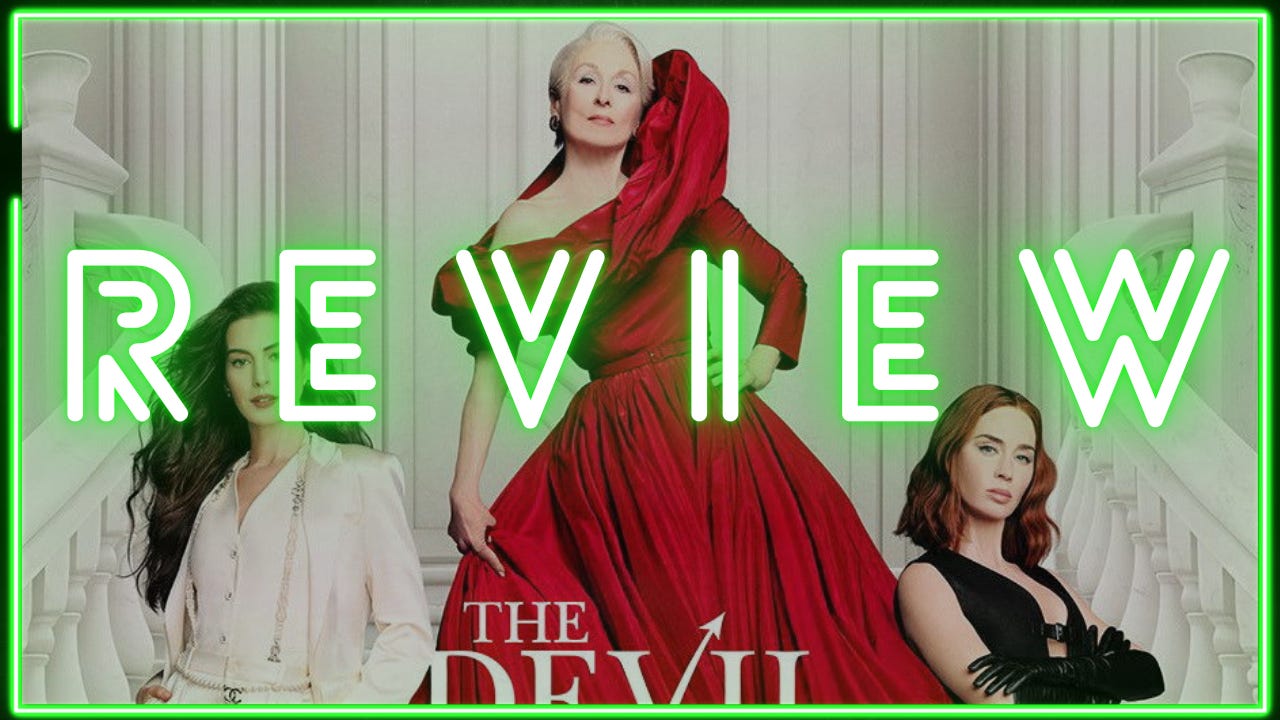
This is a quick review of the newly released film The Devil Wears Prada 2. Please note that this is just one of the many movies I will have watched each year, and my initial grade for this film may change over time, for better or worse. To stay up to date on my thoughts about other movies and any potential changes in my opinion on this one, follow me on Letterboxd.
Plot
Via Letterboxd: Miranda Priestly navigates her career amid the decline of traditional magazine publishing. She faces off against Emily Charlton, her one-time assistant, now a high-powered executive for a luxury group, with advertising dollars that Priestly desperately needs.
Review
Note: Apologies on this review coming out on the Monday after opening weekend. My market didn’t get a press screening, I’ve had my busy time at home helping to take care of my newborn, and this past weekend I learned of a death in the family. But here’s my review of The Devil Wears Prada 2:
I can still vaguely remember where I was when the trailer for The Devil Wears Prada dropped back in 2006. Twenty years ago, I was in my final year of high school, and because I wasn’t a film critic yet, I could pick and choose what to watch; so I never got around to Prada. It wasn’t some deliberate avoidance because it skewed toward a female audience; I just never got around to it. Still, I was curious, especially with Meryl Streep earning an Oscar nomination and the film growing beyond its source material into a modern classic, one that plenty people rank among their all-time favorites. There was even a recent stage musical adaptation that, notably, didn’t do as well as the movie.
Now, two decades later, a legacy sequel has arrived, well after the original book received its own unrelated sequels, and that meant I couldn’t ignore this world and these characters any longer. Since I planned to review the new film, I turned opening day into a double feature. I watched the original at home, followed almost immediately by the sequel at my local theater.
Before getting into the new film, I have to admit that finally watching The Devil Wears Prada left me pretty underwhelmed. From what I understand, the source novel leans less comedic and tracks a sharper arc of the protagonist losing herself under the influence of “the devil” in her boss, Miranda Priestly. The film opts for a lighter tone and a more hopeful ending, tweaking character dynamics along the way such as her best friends personality, her boyfriend’s profession, and even softening Miranda slightly, though not consistently.
What really didn’t work for me was how unlikable I found most of the characters. Nigel (played by Stanley Tucci) is the lone exception. The Runway workplace feels outright toxic, Miranda never meaningfully redeems herself, Emily (Emily Blunt) leans more bully than potential ally, and Anne Hathaway’s “Andy” gradually becomes everything she claimed she wouldn’t be. I’ve heard the “boring boyfriend is the real villain” argument for years, but while Nate is severely underwritten, Andy treats him poorly and then jumps into a romance with an even flatter character who feels parachuted into the story.
So I went into the sequel with low expectations after that first viewing, and to its credit, it does address some of those issues.
The biggest improvement is that the characters are simply more likable. Andy feels more confident and grounded, Emily is closer to what her personality should be, and Miranda is given a more deliberate attempt at humanity, even earning something resembling a redemption arc this time. Nigel, once again, is the standout. Their arcs land in more satisfying places compared to the uneven, sometimes bleak endings of the original.
The film also delivers on what fans loved the first time around. The fan service will absolutely work for its target audience, and seeing these characters get more fulfilling conclusions will likely be a big plus for longtime fans.
And despite my issues, Meryl Streep is clearly having a great time as Miranda. Her performance is still magnetic, and it’s easy to see why the character became so iconic, regardless of how you feel about the writing.
But that smoothing of edges comes with trade-offs. The sequel introduces contradictions that don’t quite line up with the original. Andy being excited to return to Runway clashes with where we left her. Miranda shifts from an intimidating, inscrutable figure to someone hosting parties and navigating a safer, more conventional personal arc, particularly in her marriage to Kenneth Branagh’s character, who’s portrayed as a straightforwardly supportive husband. Even Nigel’s storyline is wrapped up a bit too neatly, contradicting how Miranda treated his ambitions before.
So while the characters are more approachable and the arcs are more satisfying, the film itself feels blander, like it’s trying too hard to please everyone whether they be original fans or detractors.
There are other issues, too. The direction lacks the style and specificity I actually appreciated in the original, opting instead for a more generic presentation. The comedy is broader and less subtle. The film leans heavily on celebrity cameos (and apparently cut even more in the editing room), falls into the usual legacy sequel trap of overusing callbacks, and once again fumbles a lifeless romance subplot.
In the end, The Devil Wears Prada 2 both improves and regresses on what worked and didn’t in its predecessor. It’s very much a movie for fans of the original, and if you’re not already on that wavelength, it may leave you cold. I may simply not be the target audience here. I am a boring CIS straight guy who actually watches the Super Bowl for the game and couldn’t tell the difference between any brand of fashion pieces. Either way, I land in the same place as I did with the original - a straight up C+. If you’re a big fan of the original, you should enjoy this. If you’re not, don’t even bother or wait to see it when it shows up on streaming later this year.
“TL;DR”
Pros: Characters are more likable and interesting than previous film, with arcs that finish off in a more fulfilling fashion in comparison; Plenty of fan service for the fans of the original; Meryl Streep truly enjoys herself playing Miranda Priestly and it shines in her performance
Cons: Contradictions with softening of characters compared to its predecessor; The more unique and interesting style of the direction from the last film is now replaced by something more bland and generic; Falls into typical legacy sequel traps like forced celebrity cameos and calling back to the last film
Grading