Film Review: 28 Years Later - The Bone Temple
Fear Is The New Faith

INTRODUCTION
This is a quick review of the newly released film 28 Years Later: The Bone Temple. Please note that this is just one of the many movies I will have watched each year, and my initial grade for this film may change over time, for better or worse. To stay up to date on my thoughts about other movies and any potential changes in my opinion on this one, follow me on Letterboxd.
If you enjoy these reviews, I’d greatly appreciate it if you could share this newsletter with family and friends who might love receiving film reviews, classic movie lists, and Oscars projections straight to their inbox.
PLOT
Via Letterboxd: Dr. Kelson finds himself in a shocking new relationship - with consequences that could change the world as they know it; and Spike’s encounter with Jimmy Crystal becomes a nightmare he can’t escape.
REVIEW
It’s been damn near seven months since the release of 28 Years Later, and if you read my review of that film at the time, you’ll remember that I openly admitted I’m not exactly the biggest zombie flick guy. The sub-genre has never really been my home turf. But that film managed to carve out such a distinct and confident voice, especially compared to both its genre peers and even the earlier entries in the franchise, that I ended up really liking it. I liked it enough, in fact, to place it on my personal 2025 awards ballot for both Best Horror Feature and Best Hair & Makeup. Now we get the next chapter in this ongoing sequel trilogy with 28 Years Later: The Bone Temple.
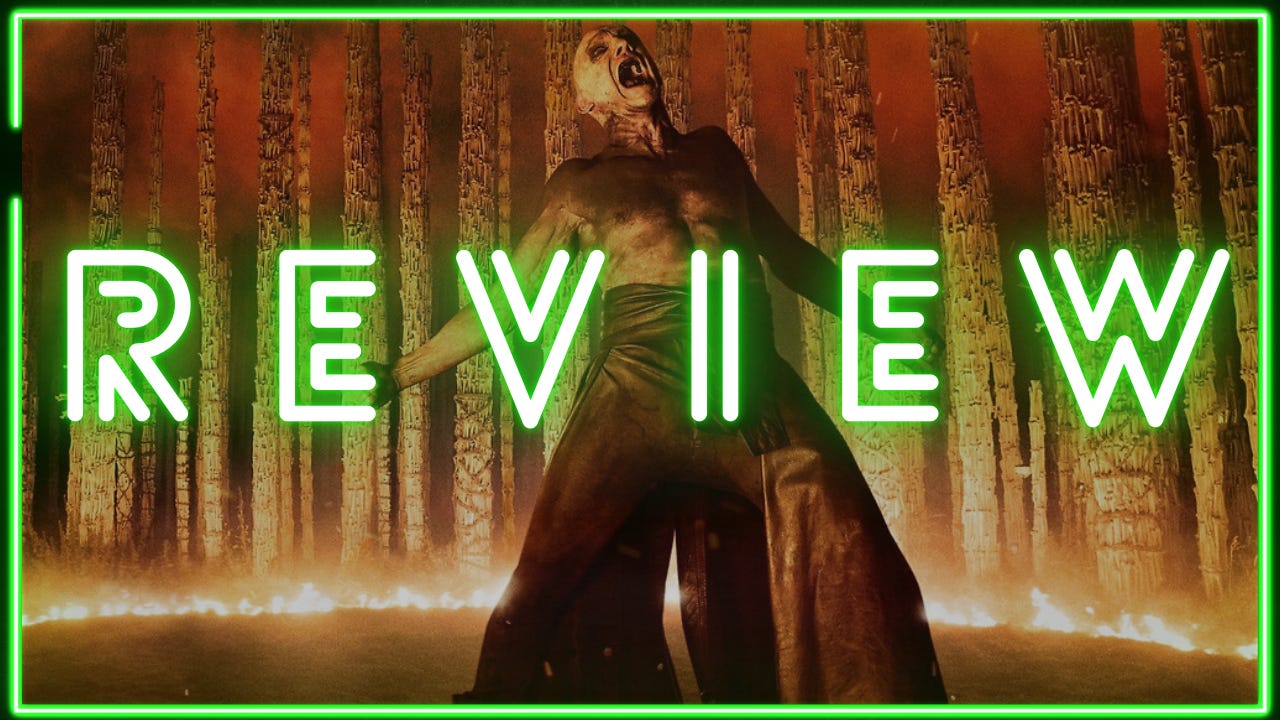
Picking up right where the previous film left off, the movie’s central premise revolves around our young protagonist Spike (played by Alfie Williams, who gave one of the best young performances of last year) after he’s violently “taken in” by a group known as the Jimmys. Their leader, Sir Jimmy Crystal, is a very clear, and very unsettling, riff on real-life prolific sexual abuser Jimmy Savile, both in appearance and affect. Crystal believes himself to be the son of Satan, and he forces his inner circle, referred to as his “fingers,” to carry out acts of cruelty that rank among the most disturbing things I’ve seen a cinematic villain orchestrate onscreen. We’re talking full-on serial killer cult territory; stuff that’s genuinely horrifying and will likely be a hard watch for some audiences.
Jack O’Connell, coming off his iconic turn in Sinners, plays Crystal, and it’s another absolute home run. He’s terrifying in a way that feels grounded rather than theatrical, which somehow makes it worse. This is the kind of villain performance that sticks with you long after the credits roll.
That said, the decision to make Spike a captive throughout the film does have a downside. It results in him feeling more like a background character this time around, and I definitely felt less agency from him than I did in the previous installment. Alfie Williams still does solid work, but the script simply doesn’t give him as much room to show his range here, making this one of the film’s few notable flaws.
The real standout of the movie, though, might be Ralph Fiennes in his return as the eccentric yet benevolent Doctor Nelson. We follow him as he stumbles onto a potential cure for the virus through an unlikely friendship that gives him the opportunity he’s been chasing. Fiennes goes all out in this role, there’s a full-frontal scene that will undoubtedly get people talking, and another sequence where he pretends to be a supernatural being that is going to absolutely kill with metal heads in the audience. It’s funny, strange, and oddly moving, all at once. Fiennes clearly understands the assignment and then pushes it even further.
Thematically, the film leans heavily into a humanistic, anti-religious cult framework, honing in on the idea that the uninfected can be just as monstrous, if not more so, than the infected themselves. This entry dials back the hero’s journey elements that I really connected with in the last film and instead embraces a much harsher, bleaker post-apocalyptic wasteland horror. While I missed some of that, the overall story arc still felt like a natural progression from the previous installment, and it leaves the trilogy in an intriguing place heading into the final film.
Director Nia DaCosta, fresh off Hedda (which also landed in a couple categories on my personal awards ballot last year) steps behind the camera here. After two straight IP-driven directorial efforts from her that didn’t work for me at all, this felt like a course correction. She’s clearly been given more freedom to inject her voice into the material, and it shows in the film’s tone, pacing, and willingness to get genuinely uncomfortable.
Like its predecessor, 28 Years Later: The Bone Temple strikes a compelling balance between auteur sensibility and franchise horror, resulting in something that feels ambitious and impressive. The shift from a heroic survival story to a terrifying cult-escape narrative is handled seamlessly, making the transition from film to film feel earned rather than jarring. After being underwhelmed by the first few movies I’ve seen this year, this easily stands as the early standard-bearer for my favorite film of the early year so far. I’m landing on a very solid B+ for this, right in line with its predecessor.
“TL;DR”
Pros: Nia DaCosta’s voice is better able to shine in this versus her previous IP directorial efforts; Ralph Fiennes owns role as Doctor Nelson; Jack O’Connell’s Jimmy Crystal is a terrifying new villain to add to horror’s catalog; Those seeking full frontal gore are going to get it; Auteur cinema meets IP horror that makes it stand out just like its predecessor did
Cons: If you’re not a huge fan of gore and ultra violence in film this won’t be for you; Alfie William’s Spike is regarded more to a background character in this with less agency; Abrupt cliffhanger ending just like the previous film
GRADING